Balkan EN
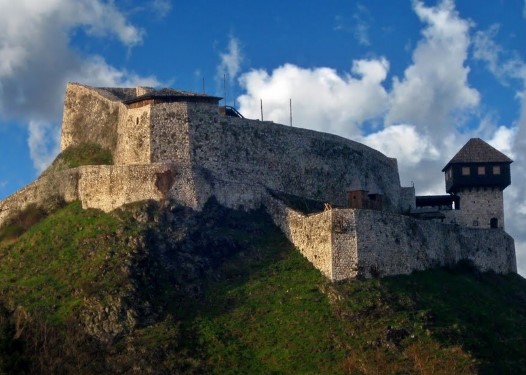
Doboj Fortress in Bosnia
In northern Bosnia, where Balkan mountains slowly fade into lowlands, in the 13th century, sprouted the fortress and borough of Doboj, thanks to, primarily, an extremely large value of communication crossings, created by nature and meetings of thee river valleys of Bosnia, Spreca and Usora. It is believed that the construction of the Doboj fortress began and lasted in the time period from 1250 to 1300. The medieval part of Gradina was built by the Kotromanics, and the surrounding wall was built by the Turks occupation of this area.
The Doboj fortress was mentioned the first time in a written document in 1415: "...in Usora suptus castrum Doboy...". This news was sent to the Hungarian king Sigismund by Dubrovnik merchants
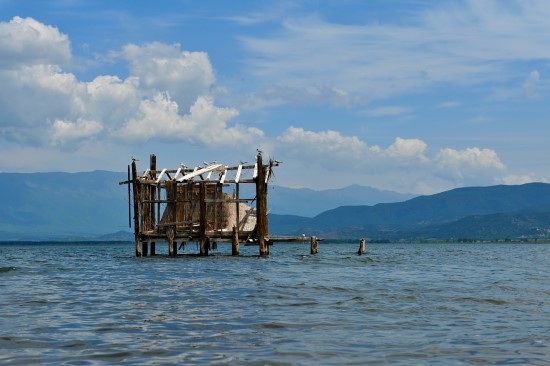
Doiran Lake in Macedonia
Doiran Lake is a lake with an area of 43.1 km² shared between the Republic of Macedonia (27.3 km²), and Greece (15.8 km²).
Svrzo's house
Svrzo's house, now a museum, was built in the 18th century and represents an outstanding example of the living culture during the Ottoman period. To a certan extent, however, it is an ideal that even contemporary architects aspire to when building houses.
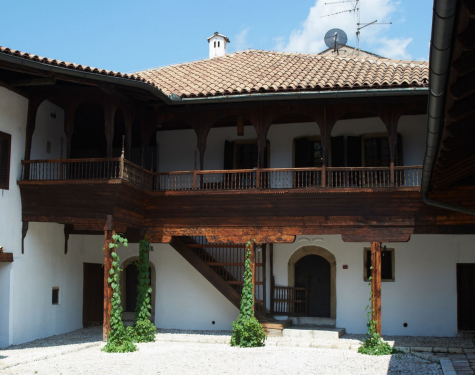
Svrzo's house, the living area of a rich aristrocratic family, but equally thousands of similar houses inhabited by the citizens of Sarajevo, particularly in the principles of living and the attitude to life. The house had to be relatively big, with enough space for all residents including the servants, it had to be enlosed by a high wall in order to protect the intimacy of the area, it had to have an unhindered view, which was usually enabled through the back yard, it had to have running water for the preservation of the faultless living hygiene. In those times, separate living quarters were required for men and woman, as can be seen in Svrzo's house.
Morica han
From about fifty that existed during the Ottoman period, Moritcha Han (Morića Han) is the only preserved Sarajevo han, the predecessors of hotels. Its dimensions are impressive, almost 50x40 metres.
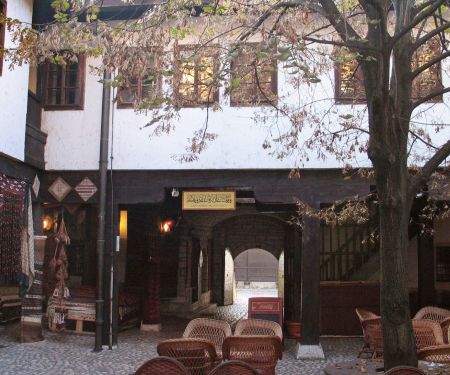
In the centre of the han there was a quadrangular yard surrounded by stables and shops. The first flor contained 44 rooms for travellers, mostly traders from distant countries.
Morića Han was burnt and rebuilt several times. Today, the ground floor houses a national restaurant and a big gallery of beautifull handmade orienatal carpets enabling its visitors a shoping expirience that would usually require them to travel thousand miles further east.
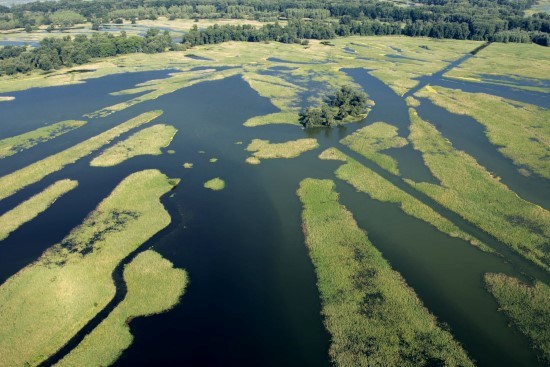
The Amazon of Europe - The Kopacki Rit, Croatia